If you picture coastal living as morning beach walks, coffee a few blocks from home, and a neighborhood that feels more like a seaside town center than a spread-out suburb, Del Mar Village will likely catch your attention. But if you are considering a move here, it helps to understand that the lifestyle and the housing stock are both distinct. You are looking at a compact, walkable coastal area with older homes, limited inventory, and premium pricing. Let’s dive in.
What living in Del Mar Village feels like
Del Mar describes itself as a quaint seaside village about 20 miles north of San Diego, with roughly 4,200 residents across 2.2 square miles. In the village core, that small-town identity feels especially real because the central area is compact.
City planning materials describe the core village area as about 40 acres and 68 properties, centered on Camino del Mar between 9th Street and the area north of 15th Street. In practical terms, that means you are not moving into a typical large suburban neighborhood. You are stepping into a dense coastal center with a more intimate, pedestrian-friendly feel.
One of the biggest lifestyle draws is that the village is genuinely walkable. The city notes that you can explore the area without a car, with independent shops, services, restaurants, and boutique hotels accessible on foot or by bike.
That walkability shapes daily life in a meaningful way. Instead of planning every errand around driving, you can build a routine around short walks, casual stops, and quick access to the beach and village businesses.
Beach access is part of daily life
In Del Mar Village, the beach is not just a backdrop. It is part of how many people spend their mornings, evenings, and weekends.
The city says Del Mar has more than two miles of sandy beach. It also highlights well-known local spots like Powerhouse Park, Seagrove Park, the 15th Street surf break, and North Beach, which is also known as Dog Beach.
For you as a buyer, this matters because the coastal lifestyle here is active and visible. Beach walking, running, surf access, coastal bluffs, and nearby outdoor spaces like Torrey Pines State Park and Crest Canyon are all part of the area’s everyday appeal.
If you want a neighborhood where outdoor recreation is built into the setting, Del Mar Village checks that box. The tradeoff is that popular coastal access also brings more visitors, especially in peak seasons.
Walkability is strong, but parking takes planning
A common question about Del Mar Village is whether you really can live with less driving. Based on the city’s description of the area, the answer is yes, especially in and around the village core.
That said, parking still affects daily convenience. The city encourages downtown visitors to use the Civic Center garage, and notes that while some village streets offer free no-limit parking, beach-adjacent areas often use meters or posted time limits.
On busy summer days, many beach parking spaces can fill by noon. So while the area is very walkable, you should still expect parking to require planning if you are hosting guests, heading to the beach at peak times, or moving around during summer weekends.
Housing in Del Mar Village is varied, but mostly older
When people imagine Del Mar, they often picture luxury coastal homes with ocean views. That image is part of the story, but the housing mix is broader than one single home type.
According to Del Mar’s Housing Element, detached single-family homes make up 48.2% of the city’s housing stock. Attached homes account for 19.8%, and apartment buildings with 10 or more units account for 24.0%.
That data tells you two important things. First, detached homes remain the largest share of housing. Second, there is still a meaningful mix of attached and multifamily options, even in a market known for high-end coastal real estate.
For buyers focused on Del Mar Village specifically, the main takeaway is that walkable village-adjacent housing is limited and tends to come in a mix of older single-family homes, attached residences, and some multifamily properties. It is not a broad, entry-level market with abundant new inventory.
Expect older homes with updates over time
If you are hoping for a neighborhood full of newly built homes, Del Mar will probably feel different from newer coastal developments. The city reports that about 63% of Del Mar’s housing was built between 1950 and 1970, while only 7% of the current housing stock has been added since 2000.
That age profile matters because it shapes both character and maintenance expectations. Many homes in and around Del Mar Village reflect older coastal construction that has been remodeled, expanded, or upgraded over the years.
For you, that can create opportunity and complexity at the same time. A well-updated older home may offer charm, location, and mature surroundings, while a less-updated property may need a careful look at condition, systems, and renovation potential.
This is one reason hyper-local guidance matters in Del Mar. In an older, high-value coastal market, understanding improvement quality, site fit, and long-term value drivers can make a major difference.
Architectural style is mixed, not uniform
Some coastal communities are known for one dominant look. Del Mar is not one of them.
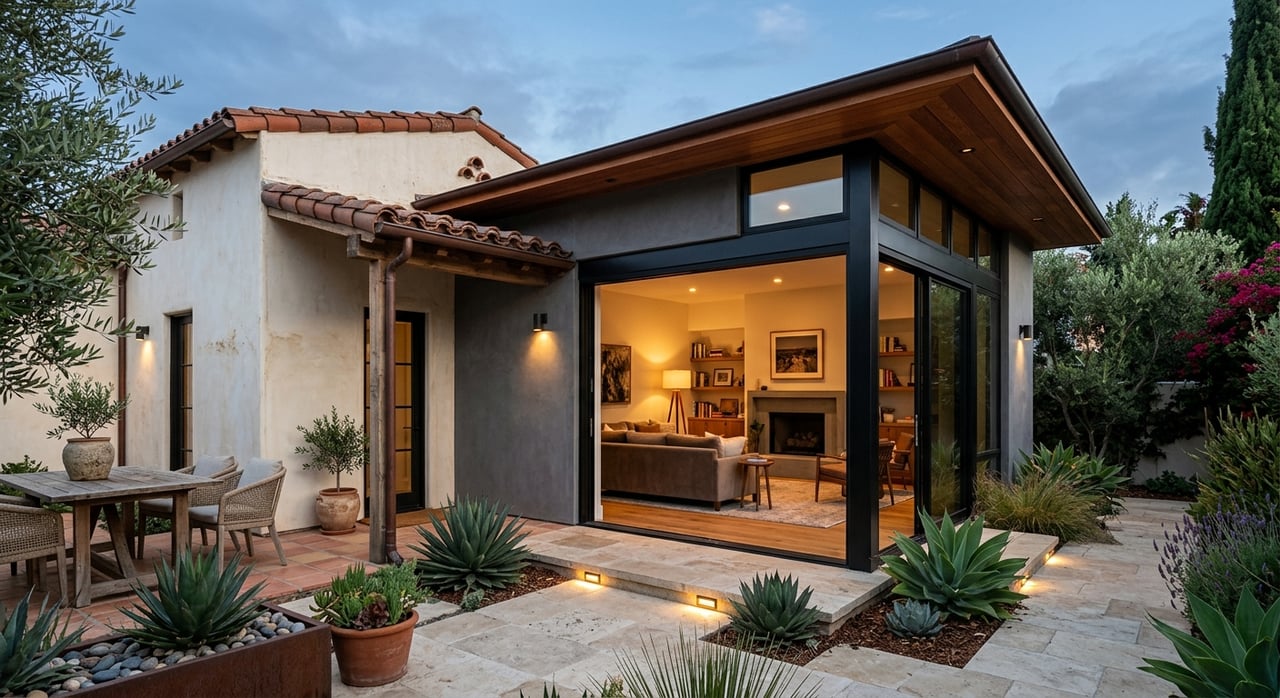
The city’s design review guidance says Del Mar does not have a preferred architectural style. Instead, it points to a wide variety of homes, from classic to eclectic to contemporary, with review focused on quality architecture, materials, and compatibility with the site and neighboring homes.
That gives Del Mar Village a layered visual identity. As you walk the area, you may see older cottages, remodeled coastal homes, and more contemporary residences within a relatively compact footprint.
For buyers, this means you should expect variety rather than a single neighborhood aesthetic. It also means design and remodel decisions tend to happen within a more regulated context, which can help preserve the overall character of the area.
Pricing reflects a premium coastal market
Del Mar sits in the premium tier of the San Diego coastal market. If you are exploring the village lifestyle, it is important to pair that appeal with a realistic view of pricing.
As of April 2026, Realtor.com reported a $4.175 million median listing price in Del Mar, a $3.175 million median sold price, 71 homes for sale, a 48-day median days-on-market figure, and a median rent of $11,000 per month. The same source described Del Mar as a seller’s market.
Redfin’s March 2026 snapshot showed a $4.3 million median sale price, homes receiving about three offers on average, and roughly 112 days on market. While the numbers differ by source and timing, both point to the same conclusion: Del Mar is expensive, inventory is limited, and the pace is active without always being immediate.
That last point is useful. In some luxury markets, buyers assume everything moves instantly. In Del Mar, pricing, property condition, location, and uniqueness can all affect timing.
Who Del Mar Village tends to fit best
Del Mar Village tends to appeal to buyers who place a high value on walkability, beach access, and a true coastal town setting. If you want to be close to dining, local services, and outdoor recreation in a compact environment, the village has a lot to offer.
It can also be a strong fit if you appreciate older homes with character or see value in a property that has been thoughtfully updated over time. Because the housing stock is limited and often unique, buyers who do well here usually come in with clear priorities and a flexible mindset.
On the other hand, if your top priority is newer construction, a larger selection of homes, or more accessible pricing, Del Mar Village may feel constrained. The lifestyle is distinctive, but so are the barriers to entry.
What to consider before you buy
Before you focus on a specific property, it helps to think through how you want to live in Del Mar Village day to day. A home that looks perfect on paper may feel very different once you factor in parking, walk routes, beach traffic, and the realities of older construction.
A few questions can help guide your search:
- Do you want true walkability to shops, restaurants, and the beach?
- Are you comfortable with an older home that may have been renovated in phases?
- Would you consider an attached home or condo to get closer to the village core?
- How important is parking for your household and guests?
- Are you looking for a primary residence, vacation home, or long-term coastal hold?
In Del Mar, those details shape value as much as square footage does. The right purchase often comes down to matching the property to your lifestyle, not just the listing photos.
If you are weighing a move to Del Mar Village, working with a local advisor who understands coastal housing stock, neighborhood differences, and pricing strategy can help you move with more clarity. For tailored guidance on Del Mar and other coastal San Diego neighborhoods, connect with Scott Harden.
FAQs
Is Del Mar Village actually walkable for daily living?
- Yes. The city says the village can be explored without a car, with shops, services, restaurants, and other local destinations accessible on foot and by bicycle.
What housing type is most common in Del Mar?
- Detached single-family homes are the largest share of Del Mar’s housing stock at 48.2%, followed by attached homes at 19.8% and apartment buildings with 10 or more units at 24.0%.
Are most homes in Del Mar Village newly built?
- No. Del Mar’s housing stock skews older, with about 63% of homes built between 1950 and 1970 and only 7% added since 2000.
How expensive is living in Del Mar?
- Recent market data places Del Mar in a very high price range, with median listing and sale metrics in the low-to-mid $4 million range depending on the source and time period.
What is the beach lifestyle like in Del Mar Village?
- Beach access is a major part of daily life, with more than two miles of sandy beach, parks, surf access, coastal bluffs, and nearby outdoor recreation highlighted by the city.
Is parking difficult in Del Mar Village?
- Parking can require planning, especially in summer. The city notes that some village streets have free no-limit parking, while beach-adjacent areas may use meters or posted time limits, and many beach spaces fill by noon on busy days.
